

This isn't a better version of the old model. It's a fundamentally different one.
Most conversations about switching IT vendors focus on faster response times, faster ticket resolution. Sentinel iQ is built around a different question: how many of those tickets should have never existed in the first place?
Most conversations about switching IT vendors focus on faster response times, faster ticket resolution. Sentinel iQ is built around a different question:
How many of those tickets should have never existed in the first place?
The answer, in most small business environments, is most of them. Missed patches create vulnerabilities. Unmonitored accounts get compromised. Failing hardware isn't caught until it fails. These are not IT crises, they are the predictable consequences of a reactive model. Sentinel iQ is built to eliminate them.

Four Reasons Businesses Choose Sentinel iQ
01 — They're Done Paying for Problems That Should Have Been Prevented
Traditional IT and cybersecurity pricing is built on friction. The more problems your environment generates, the more billable work your vendor does. That's not a partnership, it's a conflict of interest. The vendor's revenue grows when your technology struggles.
Sentinel iQ's platform model inverts this entirely. The incentive is to reduce the number of issues that ever reach a human which means our economics and yours improve together as your environment gets healthier.
02 — They Want a Platform, Not Five Disconnected Vendors
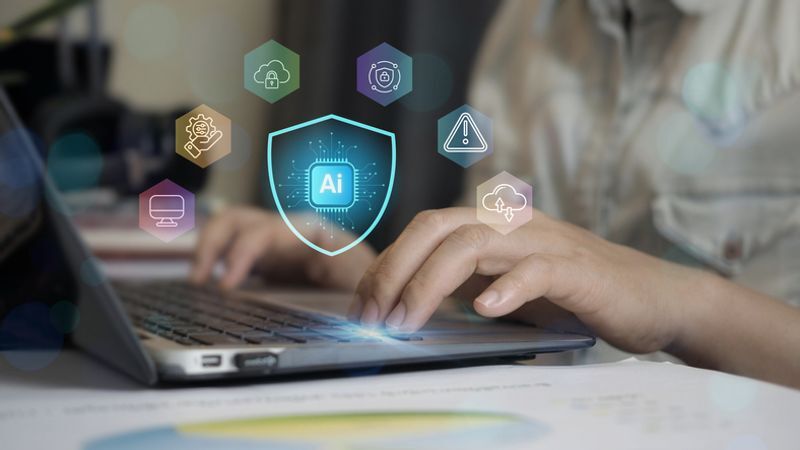
The average small business using traditional IT manages separate relationships for IT support, cybersecurity, backup, email security, and compliance. Each vendor has its own dashboard, its own reporting, its own gap where accountability ends. None of them sees the full picture because none of them has all the data.
Sentinel iQ aggregates data from every layer, endpoint, identity, email, cloud, network, and compliance into one unified layer. The platform sees what no individual tool can see: the relationship between a missed patch, an identity anomaly, and a phishing attempt that together signal a coordinated attack. That's not possible when you're managing five separate tools.
03 — They Need Costs That Stay Predictable As They Grow
Traditional IT billing scales with your problems and your headcount; the more your team grows, the more tickets they generate, the more your bill grows. For a business trying to scale, that's a cost structure that works against you.
Sentinel iQ's platform subscription is flat and predictable. As your team adds members, the platform extends to cover them. As your environment gets healthier and your risk posture improves, the same cost delivers increasing value. The math gets better as you grow, not worse.
04 — They Want to Know What Their Risk Actually Is, Before Something Happens

Most small businesses are operating blind. They don't have a current picture of their security exposure which devices are unpatched, which accounts have credentials circulating on the dark web, what attackers can see about their business from the outside, or where their biggest vulnerability sits right now. They find out when something goes wrong.
Sentinel iQ changes that with continuous risk intelligence. A live, scored view of your technology environment that shows you exactly where your exposure is, what's been remediated, and how your posture is improving over time. Not a once-a-year audit. Not a report that arrives after an incident. A real-time risk score that updates as your environment changes, visible through the Sentinel iQ Client Portal any time you need it.
This matters beyond just knowing the number. A documented, continuously tracked risk posture is exactly what cyber insurance carriers ask for at renewal. It is what compliance auditors expect to see. And it is what gives a leadership team the confidence to tell clients, partners, and regulators that their data is actively protected.
Side by Side • Old Model vs. Platform Model
8 questions. Two very different answers.
|
Traditional IT Model
|
Sentinel iQ Platform
|
|
|---|---|---|
| Who's watching my environment right now? | Someone, if you've filed a ticket | The platform, always, automatically |
| How does a threat get caught? | Usually after it's already a problem | AI detects it before it becomes one |
| When do I talk to a human expert? | Any time, including for password resets | Only when automation can't resolve it |
| How many vendors do I manage? | Multiple: IT, security, backup, compliance | One platform covering every layer |
| How do I know it's working? | You ask, and someone writes a report | Live risk dashboard, visible any time |
The Economic Argument
Every unmonitored endpoint, unpatched application, and unchecked identity carries a cost that doesn't appear on any IT invoice, until it does. A ransomware incident. A compliance violation. A breach that costs more in recovery than a year of platform protection would have.
Traditional IT vendors are paid to respond to those events. Sentinel iQ is built to prevent them. That difference is measurable in incidents that didn't happen, in downtime that didn't occur, in insurance premiums that didn't increase, and in the hours your team spent working rather than waiting for IT to resolve something.
The measure of success for Sentinel iQ is not how busy our support team is. It is how reliably our clients can run their businesses.
Who This is Built For
Sentinel iQ is the right model if any of these are true for your business:
-
You had an IT incident: a breach, ransomware, or extended downtime, and you want a model that prevents the next one rather than responds to it
-
You're paying for managed IT and not sure what you're getting for it beyond a phone number to call when something breaks
-
Your team is growing and your IT costs are growing faster than your problems justify
-
You're facing a compliance requirement: HIPAA, PCI, cyber insurance and you need documented controls, not just a vendor relationship
-
You want to own your technology strategy; not outsource it to someone whose incentive is to keep you dependent on their support hours
FAQ
Why should I choose Sentinel iQ over a traditional managed IT company?
Sentinel iQ's platform model continuously monitors and protects your environment rather than responding after problems occur, separating automated protection from human support so costs stay predictable and incentives align with your outcomes. Traditional managed IT vendors are paid per ticket and per hour, creating a conflict of interest that rewards IT problems rather than preventing them.
How is Sentinel iQ different from just having IT support?
Traditional IT support is reactive; you call when something breaks and someone responds. Sentinel iQ is proactive. The platform continuously monitors your environment, detects risks before they become incidents, and remediates issues automatically without a service call. Human expertise is engaged only when automation cannot resolve the situation, keeping costs flat and response times near-zero for most issues.
Is Sentinel iQ more expensive than hiring an IT person or using a managed IT company?
Sentinel iQ's flat monthly platform subscription is typically less than the combined cost of separate IT, security, backup, and compliance vendors and significantly less than the cost of a full-time IT hire with benefits. More importantly, the platform prevents the incidents that generate the unpredictable costs: downtime, breach recovery, compliance violations, and emergency support calls at hourly rates.
Can a business manage its own IT with Sentinel iQ rather than having a full IT staff?
Yes. Sentinel iQ was specifically designed for businesses with 1 to 40 employees that don't have and don't need a dedicated IT team. The platform continuously manages security, monitoring, patching, backup, and compliance automatically. Your team uses the self-service portal for routine requests, and DSC experts engage when a situation genuinely requires human expertise.
Book A Demo
Stop Reacting to IT Problems. Start Preventing Them.
See what your technology environment looks like when an AI platform is watching, correlating, and acting on your behalf — continuously, autonomously, every day.